CPVC vs UPVC Pipes Explained for Plumbing and Water Systems
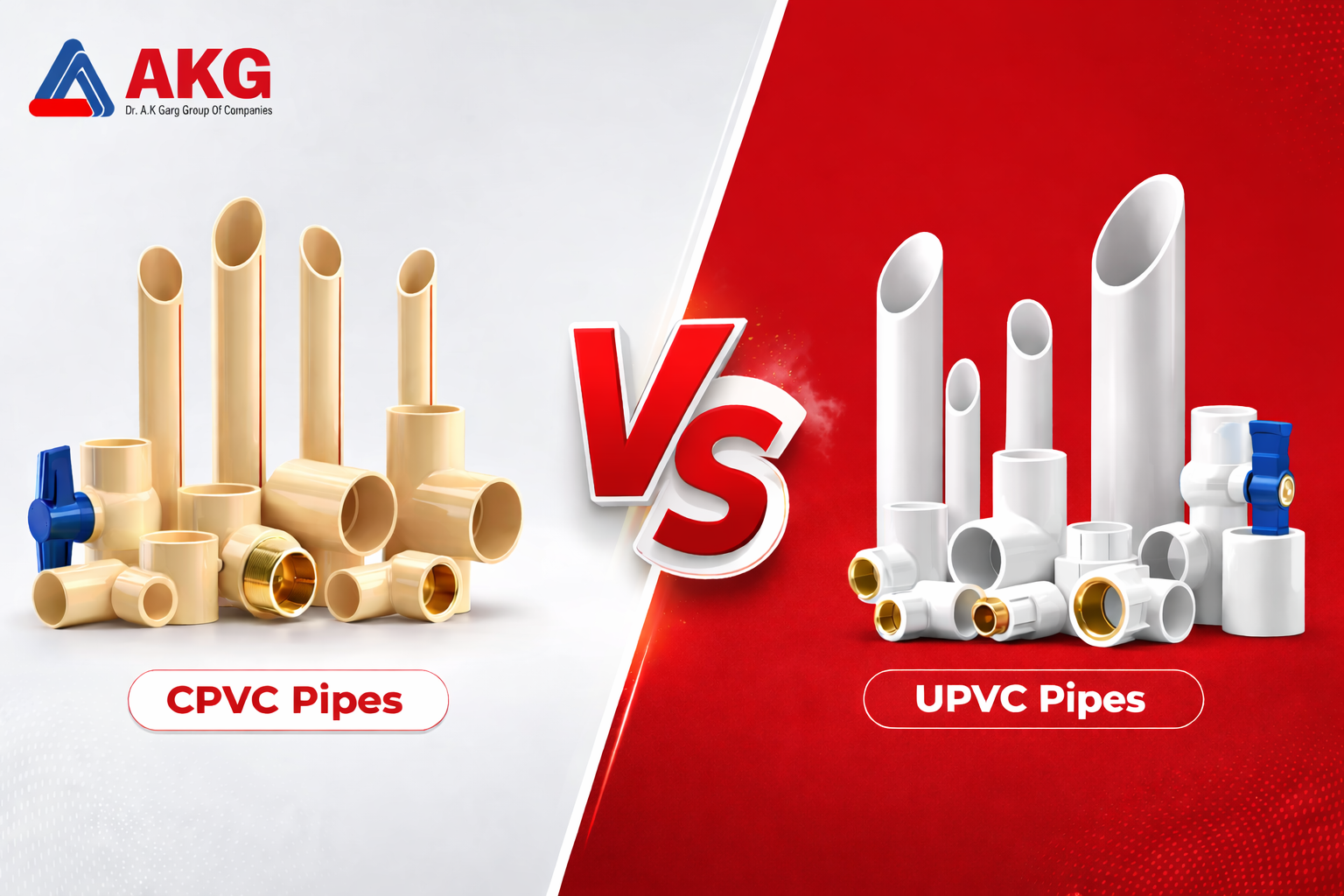
When planning a plumbing or water supply system, one of the most common decisions builders, contractors, and homeowners face is choosing between CPVC vs UPVC pipes. While both materials belong to the PVC family, they serve very different purposes across residential, commercial, and industrial plumbing systems. Understanding the difference between CPVC and UPVC pipes is essential before selecting the right pipe for your application, whether it is a hot water supply line, cold water distribution, drainage network, or agricultural irrigation system.
This guide breaks down both pipe types, covering their composition, uses, key properties, and ideal applications, so you can make an informed decision.
What Are UPVC Pipes and How They Are Used
UPVC stands for Unplasticised Polyvinyl Chloride. No plasticisers are added during manufacturing, which makes UPVC a rigid, hard plastic material with high dimensional stability. This rigidity is one of its most defining characteristics and directly influences where it performs best.
UPVC pipes are widely used across multiple sectors because of their chemical resistance, smooth interior walls for unrestricted flow, and long service life. They perform reliably in cold water applications and are not recommended for systems that carry hot water above 60°C.
Common Uses of UPVC Pipes
- Cold water distribution in residential and commercial buildings
- Underground drainage and sewage systems
- Surface drainage and stormwater management
- Agricultural irrigation lines and water distribution networks
- Borewell casing in groundwater extraction systems
UPVC pipes are valued for being cost-effective, UV-resistant when treated, and easy to install due to their light weight. Their smooth bore surface minimises friction loss, making them efficient for long-distance water supply runs.
What Are CPVC Pipes and How They Are Used
CPVC stands for Chlorinated Polyvinyl Chloride. It is produced by further chlorinating the base PVC resin, which raises its chlorine content from approximately 57% to up to 74%. This additional chlorination significantly elevates its heat tolerance, making it suitable for applications involving both hot and cold water lines.
CPVC pipes can withstand temperatures up to 93°C, which makes them a reliable choice for indoor plumbing systems where hot water supply is required. This thermal resistance, combined with strong pressure-handling capability, positions CPVC as the preferred material for residential and light commercial hot water distribution.
Common Uses of CPVC Pipes
- Hot and cold water supply lines in homes, apartments, and commercial spaces
- Industrial fluid handling systems where mild chemical resistance is required
- Fire sprinkler systems in residential buildings
- Solar water heating systems with moderate temperature output
- Potable water distribution where food-grade safety compliance is required
Because CPVC is slightly more flexible than UPVC, it can absorb minor thermal expansion without cracking, which is a practical advantage in systems that experience frequent temperature changes throughout the day.
Key Differences Between CPVC and UPVC Pipes
The difference between CPVC and UPVC pipes goes beyond their names. Here is a structured comparison across the most important parameters:
| Feature | CPVC Pipes | UPVC Pipes |
|---|---|---|
| Full Form | Chlorinated Polyvinyl Chloride | Unplasticised Polyvinyl Chloride |
| Temperature Resistance | Up to 93°C | Up to 60°C |
| Best For | Hot and cold water supply | Cold water, drainage, irrigation |
| Flexibility | Slightly flexible | Rigid |
| Chemical Resistance | High | Moderate to high |
| Pressure Rating | Higher | Standard |
| Cost | Comparatively higher | More economical |
| Typical Applications | Indoor hot and cold plumbing | Drainage, agriculture, cold supply |
Practical Plumbing Scenarios for CPVC vs UPVC Pipes
Understanding how each pipe performs in real-world situations helps simplify decision-making on the ground.
Scenario 1: Residential Hot Water Plumbing
For a standard residential building with a geyser or solar heater connected to bathroom and kitchen outlets, CPVC pipes are the right choice. The pipe will regularly carry water at elevated temperatures, and UPVC's lower heat tolerance makes it unsuitable here. CPVC handles both the thermal load and the pressure rating required for continuous hot water distribution throughout the building.
Scenario 2: Underground Drainage and Sewage
For underground drainage lines, soil pipes, or stormwater channels, UPVC pipes are the standard specification. Their rigidity holds up under soil loads, their smooth inner surface allows free flow, and their resistance to common chemicals found in sewage makes them a durable long-term solution.
Scenario 3: Agricultural Irrigation
For open-field irrigation networks distributing cold water over large distances, UPVC agri pipes are the practical and cost-effective choice. CPVC would be overspecified and more expensive without providing any additional functional advantage in this use case.
Scenario 4: Cold Water Supply in Multi-Storey Buildings
For cold water risers and distribution lines within a building that are not connected to any heating source, UPVC pipes are adequate and more economical than CPVC. However, if the same building also has hot water supply lines, CPVC must be used for those specific runs.
How to Choose Between CPVC and UPVC for Your Plumbing Needs
The choice between CPVC and UPVC pipes ultimately comes down to three core questions:
- Will the pipe carry hot water? If yes, choose CPVC. If the system is strictly cold water, UPVC is sufficient.
- Is the installation above ground or underground? Underground drainage and sewage systems almost universally use UPVC. Indoor plumbing with hot water runs requires CPVC.
- What is the budget? UPVC is more economical. CPVC commands a higher price point due to its advanced material processing but is worth the investment for hot water systems.
If hot water distribution is your primary concern, we have covered in detail why CPVC pipe is the best choice for hot water plumbing, from its heat resistance and pressure performance to real-world installation advantages that make it the go-to specification for Indian builders and contractors.
Conclusion
Both CPVC and UPVC pipes are engineered for specific plumbing conditions and neither is universally superior. The right choice depends entirely on your application. CPVC is built for hot and cold water systems that demand higher temperature and pressure resistance, while UPVC is the practical, durable solution for cold water distribution, drainage, and agricultural use. Understanding the difference between CPVC and UPVC pipes ensures your plumbing system performs reliably over its complete service life.
For quality-tested options across both materials, explore AKG Group's range of CPVC pipes and UPVC pipes, manufactured to meet BIS standards and designed for long-lasting performance in Indian plumbing conditions.
Frequently Asked Questions
What is the main difference between CPVC and UPVC pipes?
The main difference between CPVC and UPVC pipes lies in their heat tolerance and chlorine content. CPVC is further chlorinated compared to UPVC, which raises its maximum operating temperature to around 93°C, making it suitable for both hot and cold water systems. UPVC handles temperatures up to approximately 60°C and is best used for cold water supply, underground drainage, and agricultural applications. CPVC is also slightly more flexible, while UPVC is more rigid.
Are CPVC and UPVC pipes safe for drinking water?
Yes, both CPVC and UPVC pipes can be used in potable water systems when they comply with applicable safety standards. CPVC pipes are widely specified for drinking water supply lines in residential buildings. UPVC pipes are also used in cold water distribution systems for drinking water. In both cases, it is important to verify that the pipes carry appropriate BIS certification or relevant quality markings before installation in any drinking water application.
Can UPVC pipes be used for hot water systems?
No, UPVC pipes are not recommended for hot water systems. UPVC has a maximum operating temperature of around 60°C, and sustained exposure to hot water above this threshold can cause the pipe to soften, lose dimensional stability, and fail over time. For any plumbing application involving hot water, including geyser connections, solar water heater outlets, or hot water distribution lines, CPVC pipes are the correct and safe specification.
When should I choose CPVC over UPVC for my plumbing project?
Choose CPVC over UPVC when your plumbing system involves hot water supply, requires higher pressure ratings, or needs a pipe that can handle thermal expansion without cracking. CPVC is the right choice for bathroom and kitchen hot water lines, geyser connections, solar heater distribution pipes, and any indoor plumbing network where water temperatures regularly exceed 60°C. For cold water distribution, drainage, sewage, or outdoor irrigation, UPVC remains the practical and cost-effective choice.