Different Types of Electrical Conduit Pipes: Choosing the Right One for Safe and Efficient Wiring
1. Introduction
Selecting the correct electrical conduit pipe types is one of the most important steps in ensuring safe, efficient, and long-lasting electrical installations. Conduit pipes protect wires from moisture, heat, corrosion, and mechanical damage, making them essential for both residential and commercial wiring systems. Understanding the different types of conduit pipes helps electricians, contractors, and homeowners make informed choices that align with performance and safety needs.
2. Understanding Electrical Conduit Pipes and Their Role in Wiring Safety
An electrical conduit pipe acts as a protective channel for electrical wiring. It not only organizes cables neatly but also shields them from external elements such as water, dust, and impact.
Key roles of conduit pipes include:
- Protecting electrical cables from damage and exposure
- Preventing short circuits and electrical hazards
- Ensuring easy maintenance and upgrades in the future
- Helping installations comply with safety standards
High-quality conduits from leading electrical wires manufacturers such as AKG Group are made using advanced materials that ensure durability, insulation, and mechanical strength under demanding conditions.
3. Types of Electrical Conduit Pipes: Side-by-Side Comparison of Metallic and Non-Metallic Options
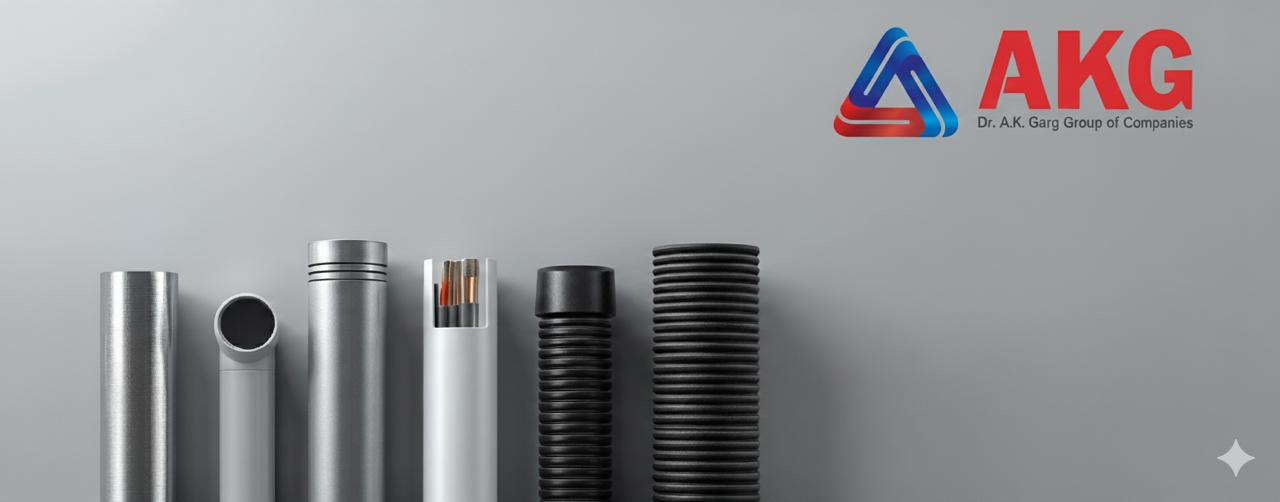
Electrical conduit pipe types can broadly be classified into metallic and non-metallic variants, each with unique properties and applications.
| Type | Material | Common Uses | Key Benefits |
|---|---|---|---|
| Rigid Metal Conduit (RMC) | Galvanized steel | Outdoor and heavy-duty commercial wiring | High strength and corrosion resistance |
| Electrical Metallic Tubing (EMT) | Thin-walled steel or aluminum | Commercial and indoor wiring | Easy to bend, lightweight |
| Flexible Metal Conduit (FMC) | Interlocked steel strips | Machines or areas with vibration | Flexibility and vibration resistance |
| PVC Conduit Pipe | Polyvinyl chloride (non-metallic) | Residential and commercial concealed wiring | Lightweight, corrosion-free, easy to install |
| UPVC Conduit Pipe | Unplasticized PVC | Industrial and wet environments | Higher rigidity, flame resistance, long life |
| Liquid-Tight Flexible Non-Metallic Conduit (LFNC) | PVC with flexible cover | Outdoor or wet areas | Moisture-proof and weather-resistant |
At AKG Group, both PVC conduit pipe and UPVC pipe systems are designed to meet Indian safety standards while providing strength, flexibility, and long-term performance for concealed and surface wiring.
4. How to Choose the Right Electrical Conduit Pipe for Your Wiring Needs
The right conduit depends on factors such as environment, application, and installation type. Here’s a quick selection guide:
| Requirement | Recommended Type | Reason |
|---|---|---|
| Outdoor or exposed wiring | RMC or UPVC | Excellent protection from weather and impact |
| Concealed wiring inside walls | PVC Conduit | Lightweight and easy to install |
| High-temperature or industrial areas | UPVC | Flame-resistant and rigid |
| Temporary or flexible connections | FMC or LFNC | Can bend easily and withstand vibration |
When planning complex electrical installations, combining different conduit types such as rigid, flexible, PVC, and UPVC ensures optimal protection, easy cable management, and long-term reliability for both surface and concealed wiring systems.
5. Conclusion: Making Safe and Efficient Wiring Decisions
Understanding electrical conduit pipe types is crucial for achieving safe, organized, and long-lasting wiring systems. With AKG’s precision-engineered PVC and UPVC conduit pipe systems, building contractors and electrical planners can ensure safe, efficient, and maintenance-free wiring installations that meet modern safety standards.
FAQs
a) Which type of electrical conduit pipe is best for outdoor or wet areas?
UPVC or rigid metal conduits are best for outdoor applications as they offer superior resistance to moisture, impact, and corrosion.
b) Can PVC conduit pipes be used for concealed wiring inside walls?
Yes, PVC conduit pipes are widely used for concealed wiring because they are lightweight, easy to install, and ensure a neat finish.
c) What is the difference between flexible and rigid electrical conduits?
Flexible conduits are bendable and ideal for movable or vibrating setups, while rigid conduits offer more mechanical protection and are used for permanent installations.
d) How do I ensure my electrical conduit installation meets safety standards?
Always use conduits from reputed electrical wires manufacturers like AKG Group that comply with IS:9537 standards, and follow proper installation guidelines for secure fittings and protection.