FR and FRLS Cable Difference Explained for Electrical Safety and Fire Protection
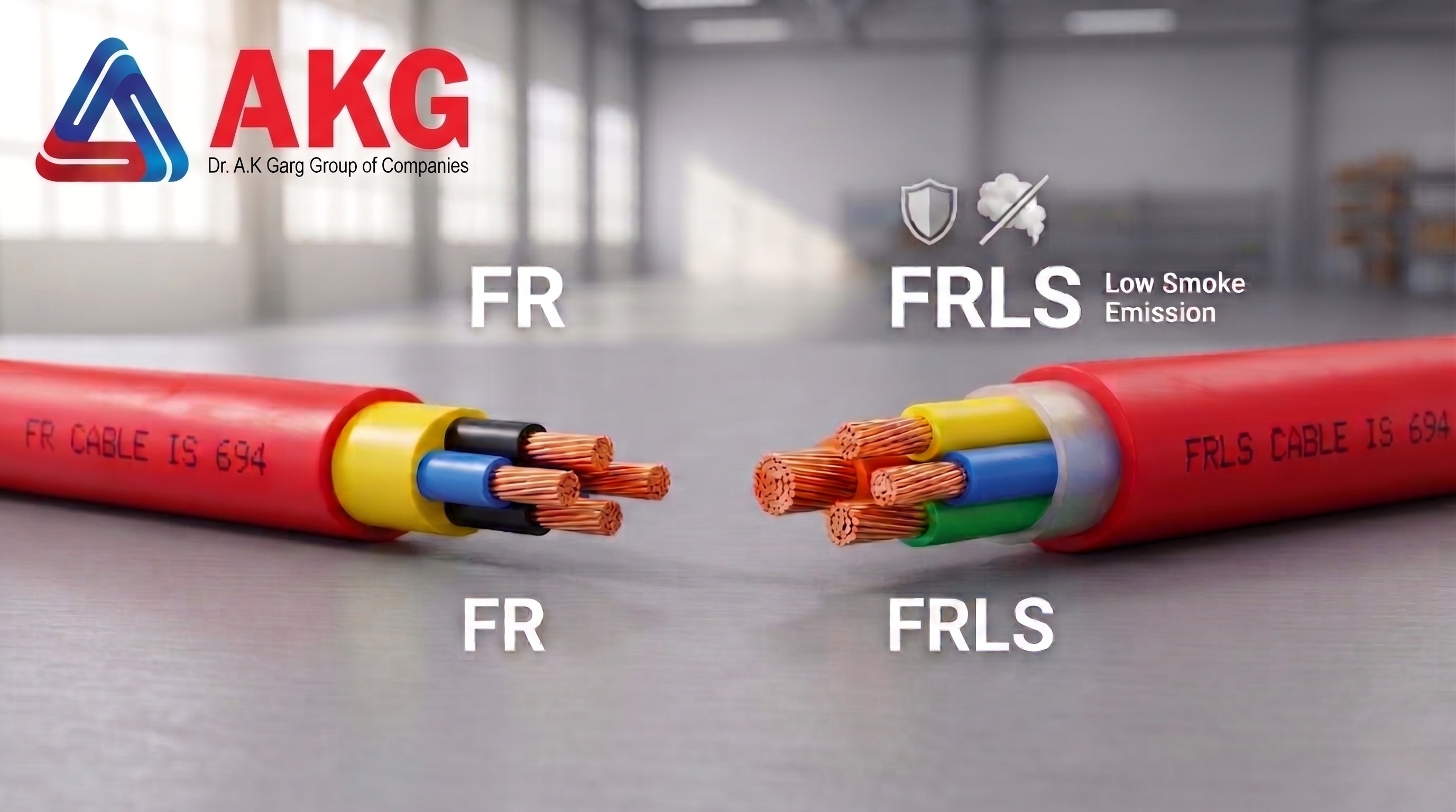
When it comes to electrical safety, the type of cable you install matters far more than most people realize. Understanding the FR and FRLS cable difference can be the deciding factor between a manageable fire incident and a catastrophic one.
Both FR and FRLS cables are designed to address fire risks in electrical systems. However, they respond to fire conditions in distinctly different ways. For engineers, contractors, and building owners across India, knowing this difference is not optional. It is essential.
What Is FR Cable in Electrical Wiring Systems
FR stands for Flame Retardant.
An FR cable is designed with a specially formulated PVC insulation compound that resists the spread of flames. When exposed to a fire source, the insulation works to prevent the fire from travelling along the cable's length.
Key characteristics of FR cables:
- Resist flame propagation along the cable
- Designed with a high oxygen index and high temperature index in the insulation
- Suitable for residential and commercial wiring where fire safety is a priority
- Manufactured in accordance with IS 694 standards
- Voltage grade typically up to and including 1100V
FR cables are widely used in homes, offices, and general commercial spaces where basic fire protection is required for the electrical wiring system.
What Is FRLS Cable in Electrical Wiring Systems
FRLS stands for Flame Retardant Low Smoke.
An FRLS cable goes one step further than FR. It not only resists flame propagation but is also engineered to emit significantly reduced amounts of smoke and toxic gases during a fire event.
Key characteristics of FRLS cables:
- Retard the spread of fire along the cable
- Emit minimum smoke and low levels of toxic or acidic fumes during fire exposure
- Reduce visibility impairment in emergency situations
- Help protect occupants and rescue teams during evacuation
- Ideal for densely wired or occupied buildings
- Approved under IS 694 standards
FRLS cables are specifically recommended for multi-storied buildings, hospitals, hotels, schools, commercial complexes, and other public buildings where evacuation safety is critical.
How FR Cables Respond to Fire Exposure
When an FR cable is exposed to fire or extreme heat, its flame retardant insulation activates to limit the spread of combustion. The cable does not easily carry the flame from one section to another.
However, FR cables do not have specific controls on the quantity of smoke they release. During fire exposure, the PVC insulation may still produce smoke and fumes. This is acceptable in open or well-ventilated spaces but can be a concern in enclosed environments with high occupant density.
FR cables are effective in preventing fire escalation within the wiring system, but smoke management is not their primary function.
How FRLS Cables Respond to Fire Exposure
FRLS cables are engineered with a specially formulated flame retardant PVC compound that addresses both fire spread and smoke emission simultaneously.
During a fire event, ordinary PVC insulation releases dense black smoke and acidic toxic gases. These gases severely impair visibility and can cause respiratory harm, slowing down evacuation and rescue operations.
FRLS insulation is designed to:
- Retard the spread of fire effectively
- Emit minimum smoke during combustion
- Release reduced toxic and acidic fumes
- Maintain safer conditions for building occupants and rescue personnel
This makes FRLS cables the preferred choice for fire-sensitive and high-occupancy environments.
Key FR and FRLS Cable Difference in Fire Conditions
| Feature | FR Cable | FRLS Cable |
|---|---|---|
| Full Form | Flame Retardant | Flame Retardant Low Smoke |
| Flame Propagation Control | Yes | Yes |
| Smoke Emission Control | No | Yes |
| Toxic Fume Reduction | No | Yes |
| Typical Application | Residential, general commercial | Hospitals, hotels, public buildings |
| Standard | IS 694 | IS 694 |
The primary FR and FRLS cable difference lies in smoke and toxic gas behaviour during fire exposure. Both resist flame spread, but only FRLS cables actively limit smoke and fume emission.
Why Flame and Smoke Behaviour Matter in Electrical Fire Safety
Most fire-related fatalities in buildings are not caused directly by flames. Studies in fire safety consistently show that smoke inhalation and toxic gas exposure are among the leading causes of injury and death during indoor fire incidents.
This is exactly why the cable type you select has life-safety implications.
In a building wired with standard PVC cables, a fire can quickly fill corridors and escape routes with dense, toxic smoke. This impairs visibility, causes panic, and severely hampers rescue operations.
FRLS cables reduce this risk significantly. By limiting smoke emission and toxic fume release, they keep evacuation routes clearer for longer and give occupants more time to exit safely.
For high-risk environments such as hospitals, hotels, schools, and commercial complexes, using FRLS cables is not just a best practice. It is a responsible decision aligned with modern fire safety standards.
Conclusion
Both FR and FRLS cables play an important role in electrical fire safety, but they serve different levels of protection. If your installation is in a standard residential or small commercial space, an FR cable with its flame retardant properties provides solid basic protection.
However, for multi-storied buildings, public spaces, and fire-sensitive environments, an FRLS cable is the right choice because it controls both flame spread and smoke emission.
Choosing the correct cable type from the start protects lives, reduces property damage, and ensures your electrical system meets fire safety requirements.
FAQ Section
1) What does FR and FRLS indicate in electrical cable classification?
FR stands for Flame Retardant, indicating a cable that resists the spread of fire along its length. FRLS stands for Flame Retardant Low Smoke, which adds the property of reduced smoke and toxic gas emission during fire exposure. Both types are manufactured under IS 694 standards for electrical safety in India.
2) Is low smoke behaviour the main point of difference between FR and FRLS cables?
Yes. The core FR and FRLS cable difference is smoke and toxic fume behaviour during fire. Both cables resist flame propagation. However, FRLS cables are additionally engineered to emit minimum smoke and reduced acidic gases, making them safer for occupied buildings where evacuation and rescue operations are critical.
3) Do FR and FRLS cables behave differently when exposed to high temperatures?
Both FR and FRLS cables use specially formulated PVC insulation with high temperature and oxygen index ratings. However, FRLS cables are specifically designed to control smoke density and toxic gas release at elevated temperatures, which FR cables do not address. This makes FRLS the safer option in enclosed or high-occupancy spaces.
4) Why is it important to understand cable behaviour during electrical fires?
Cable behaviour during fire directly affects evacuation safety. Cables that emit high smoke and toxic fumes impair visibility, trigger respiratory distress, and delay rescue operations. Selecting the right cable type, FR for general use or FRLS for critical spaces, is a key decision in building electrical safety planning.